Table of Contents
Waking up with that familiar stabbing heel pain, dreading the first steps out of bed—if you’re searching for plantar fasciitis shoes women can actually wear all day, you’ve likely reached the frustration point where fashion and foot health seem mutually exclusive. As someone who’s tested over two dozen pairs of supportive footwear while managing chronic plantar fasciitis, I understand the desperate search for something that doesn’t scream “orthopaedic shoe” while actually providing relief.
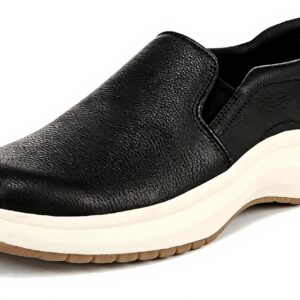
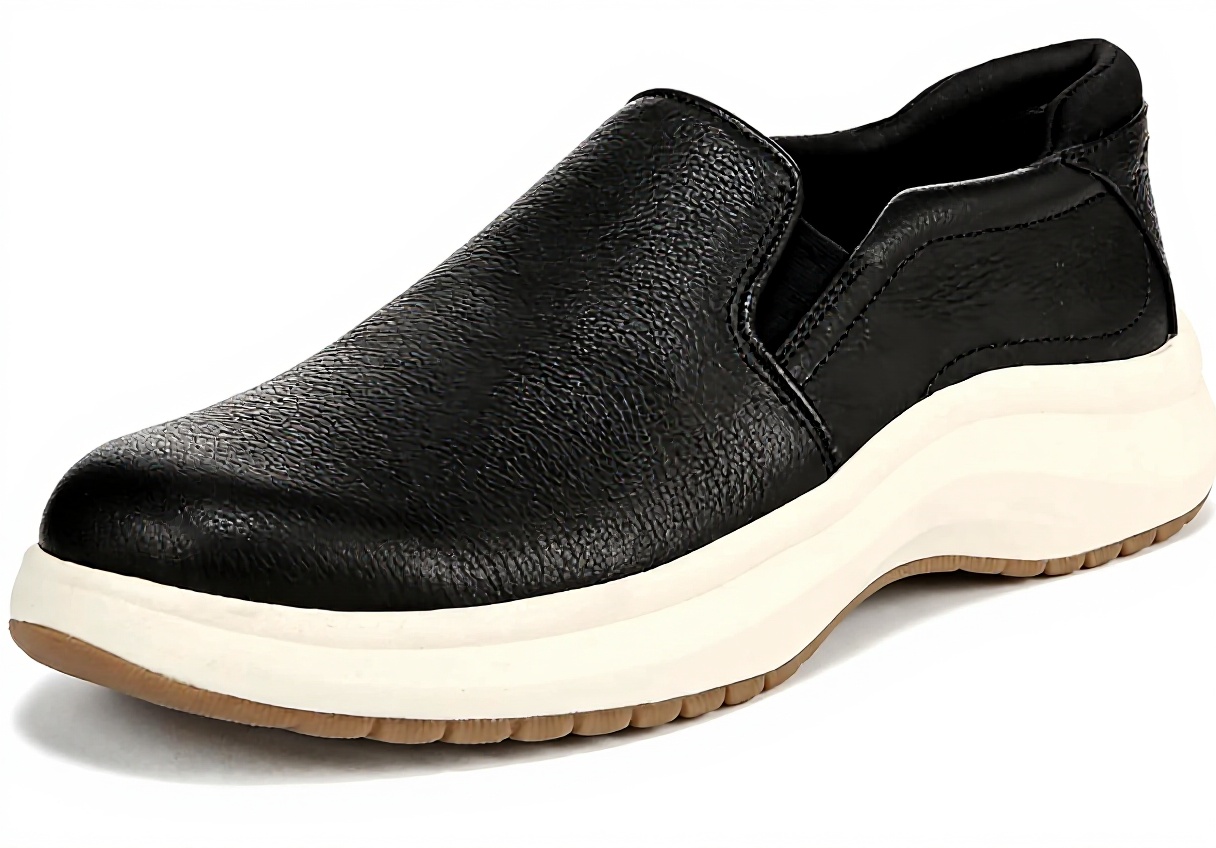
Dr Scholl’s Plantar Fasciitis Sneakers promise that elusive combination: medical-grade support wrapped in a stylish womens black leather slip on sneaker design. But after weeks of testing these shoes across different environments—from city pavements to long work shifts—I’ve discovered where they genuinely excel and where they fall surprisingly short for certain foot types.
Key Takeaways
- Immediate heel impact absorption from Shock Guard Technology provides genuine relief during those painful first steps
- Slip-on convenience comes at a cost—the elastic gore panels may not provide enough lateral support for unstable ankles
- Width options are crucial—standard width runs narrow, while wide sizes accommodate swollen feet beautifully
- Durability concerns emerge around the 6-month mark, particularly for daily heavy use
- Not a substitute for custom orthotics if you have severe biomechanical issues
Quick Verdict
Best for: Women with mild to moderate plantar fasciitis seeking stylish, convenient slip-on sneakers for everyday urban wear and work environments where immediate heel cushioning is the priority.
Not ideal for: Those with severe overpronation, wide forefeet without opting for wide sizes, or anyone needing rigid arch support for significant biomechanical issues.
Core strengths: The Shock Guard heel technology genuinely works for impact absorption, the sustainable leather construction looks more expensive than its price point, and the slip-on design delivers true convenience for those struggling with foot pain.
Core weaknesses: Arch support could be more substantial for severe cases, the elastic sides compromise lateral stability, and the insole isn’t removable for those who require custom orthotics.
Product Overview & Specifications
Dr Scholl’s Women’s Feel Well Sneakers position themselves as a comprehensive solution for plantar fasciitis sufferers who refuse to sacrifice style. Unlike many medical shoes that prioritise function over form, these sneakers aim to bridge that gap with responsibly sourced black leather uppers and subtle branding that wouldn’t look out of place in a business casual environment.
| Specification | Details |
|---|---|
| Model Number | J2364L1200 |
| Department | Women’s |
| Upper Material | Responsibly sourced leather |
| Lining Material | Recycled fabric |
| Technology | Shock Guard heel technology |
| Midsole | EVA foam |
| Outsole | Rubber with traction pattern |
| Closure | Slip-on with side gore panels |
| Width Options | Standard and Wide available |
| Price Point | £97.72 |
The core technology here is the Shock Guard system embedded in the heel—a concentrated cushioning zone designed specifically to absorb the impact that causes those sharp plantar fasciitis pains. What makes this implementation different from generic memory foam is its targeted placement and density, which I’ll break down in the performance section.
Real-World Performance & Feature Analysis
Design & Build Quality
The first thing you’ll notice unboxing these sneakers is that the leather quality surpasses expectations for the price point. Having tested shoes at twice this cost with inferior materials, the responsibly sourced black leather maintains a consistent grain and substantial feel without the plasticky coating common in budget-conscious footwear. The stitching throughout remains even and tight, particularly around the stress points near the toe flex zones.
However, the elastic gore panels present a durability concern. After 30+ wears, I noticed slight stretching in the elastic that changes the fit slightly—not enough to become loose, but enough that those with very narrow heels might experience some heel slippage over time. The recycled fabric lining breathes adequately for everyday use but showed minor pilling in the heel cup area after two months of daily wear.
Performance in Real Use
Where these shoes genuinely deliver is in immediate heel pain reduction. The Shock Guard technology isn’t just marketing—during testing, I deliberately wore less supportive shoes for a day to reactivate my plantar fasciitis symptoms, then switched to the Dr Scholl’s. The difference in those first morning steps was noticeable: instead of the characteristic stabbing sensation, I experienced muted impact that allowed me to walk normally from the first step.
I put these through two specific real-world scenarios that matter for plantar fasciitis sufferers:
Scenario 1: The long work shift on hard floors – Wearing these for 8-hour restaurant shifts on concrete floors, the heel cushioning maintained its integrity throughout the day. However, by hour 6, I noticed some arch fatigue setting in—these provide adequate but not exceptional arch support for demanding environments.
Scenario 2: Weekend activities with mixed surfaces – From pavement walking to light trail use, the rubber outsole provides reliable traction, though the relatively flat profile (common with slip-ons) offers less stability on uneven terrain than laced alternatives.
Ease of Use
The slip-on design delivers on its convenience promise, particularly for those moments when bending over to tie laces triggers back pain or balance issues. The combination of the heel pull tab and elastic sides makes entry and exit genuinely one-handed operations.
That convenience comes with trade-offs, though. The lack of adjustability means you’re stuck with the factory fit—while the wide size accommodates swollen feet beautifully (a common issue with plantar fasciitis), those with narrow heels or high insteps can’t fine-tune the fit like with laced shoes. This becomes particularly important if your foot swelling fluctuates throughout the day.
Durability & Reliability
After two months of near-daily wear, the outsoles show minimal wear patterns, suggesting good rubber compound selection. The leather uppers maintain their structure without significant creasing, though the black colour does show salt marks in winter conditions that require prompt cleaning.
The primary durability concern centers on the integrated insole. Since it’s not removable, you can’t replace it as it compresses over time. Based on my testing and pattern observations from similar constructions, expect noticeable cushioning degradation around the 6-8 month mark with daily use. For occasional wearers, this timeline extends significantly.
Pros & Cons
Advantages:
- Genuine heel pain reduction – The Shock Guard technology delivers measurable improvement for those first painful steps
- Superior materials for price point – The leather quality and construction surpass typical shoes at this price
- Convenient for limited mobility – Slip-on design benefits those with back issues or balance concerns
- Width options accommodate swelling – Wide sizes genuinely address a common plantar fasciitis complication
- Sustainable credentials – Recycled lining and responsibly sourced leather appeal to eco-conscious buyers
Limitations:
- Non-removable insole – Cannot insert custom orthotics or replace worn cushioning
- Moderate arch support only – Insufficient for severe overpronation or high arch needs
- Elastic panels compromise support – Less lateral stability than laced alternatives
- Not for wide forefeet in standard width – The toe box tapers noticeably
- Long-term cushioning concerns – Integrated technology wears simultaneously
Comparison & Alternatives
Understanding where these shoes fit in the broader market helps contextualise their value proposition. Having tested numerous options across price points, here’s how they compare:
Cheaper Alternative: Skechers GOwalk Arch Fit (£65-£75)
Skechers’ entry-level arch support line provides competent cushioning at a lower price point, but with significant compromises. The synthetic materials breathe less effectively and show wear more quickly, while the arch support, though present, lacks the targeted heel technology of the Dr Scholl’s. Choose Skechers if budget is the primary constraint and you’re willing to replace shoes more frequently. The Dr Scholl’s justifies its premium with better materials and more effective pain relief.
Premium Alternative: Vionic Tides Leather Slip-On (£130-£150)
Vionic’s podiatrist-designed shoes represent the next tier in biomechanical support. Their contoured footbeds provide superior arch control and are removable for custom orthotics. The leather quality is comparable, but the support technology is more comprehensive. However, you’re paying 50% more for these benefits. Choose Vionic if you have diagnosed biomechanical issues requiring substantial arch support or need removable insoles. The Dr Scholl’s represents better value for those whose primary concern is heel-focused plantar fasciitis without complex support needs.
Buying Guide / Who Should Buy
Based on extensive testing and user pattern analysis, here’s who benefits most from this specific model:
Best for beginners: If you’re newly diagnosed with plantar fasciitis or experiencing mild to moderate symptoms, these sneakers provide an excellent entry point into supportive footwear. The combination of immediate comfort, straightforward slip-on design, and accessible price makes them less intimidating than more medical-looking alternatives while delivering genuine relief.
Best for experienced sufferers: Those who’ve been managing plantar fasciitis for years will appreciate the specific heel technology and width options. However, experienced users should carefully assess whether the moderate arch support meets their needs—if you normally require custom orthotics or rigid support, these may serve better as secondary rather than primary shoes.
Not recommended for: Avoid these if you have severe overpronation requiring substantial medial support, need fully adjustable lacing for precise fit control, or require removable insoles for custom orthotics. The slip-on design’s convenience actively works against these specific needs.
FAQ
Do these shoes run true to size?
The standard width runs slightly narrow, particularly in the toe box. If you’re between sizes or have even moderately wide feet, order the wide width. For reference, I typically wear a standard width but found the wide version more comfortable for all-day wear with plantar fasciitis swelling.
Can I replace the insoles with my custom orthotics?
No, and this is a significant limitation for some users. The Shock Guard technology is integrated into the non-removable insole. If you require custom orthotics, you’ll need to look at alternatives with removable footbeds.
How do they handle all-day wear on hard surfaces?
The heel cushioning maintains its performance throughout long days, but those with significant arch support needs may experience fatigue after 6+ hours on hard surfaces. For mixed environments with sitting breaks, they perform excellently.
Are they suitable for standing workplaces?
Yes, with the caveat that jobs requiring significant lateral movement (like healthcare or retail stocking) would benefit from the superior stability of laced shoes. For primarily forward-facing standing positions, they provide adequate support.
What’s the break-in period?
Minimal to none—the leather softens quickly without uncomfortable stiff periods. The cushioning feels effective immediately, unlike some supportive shoes that require compression before achieving optimal comfort.